


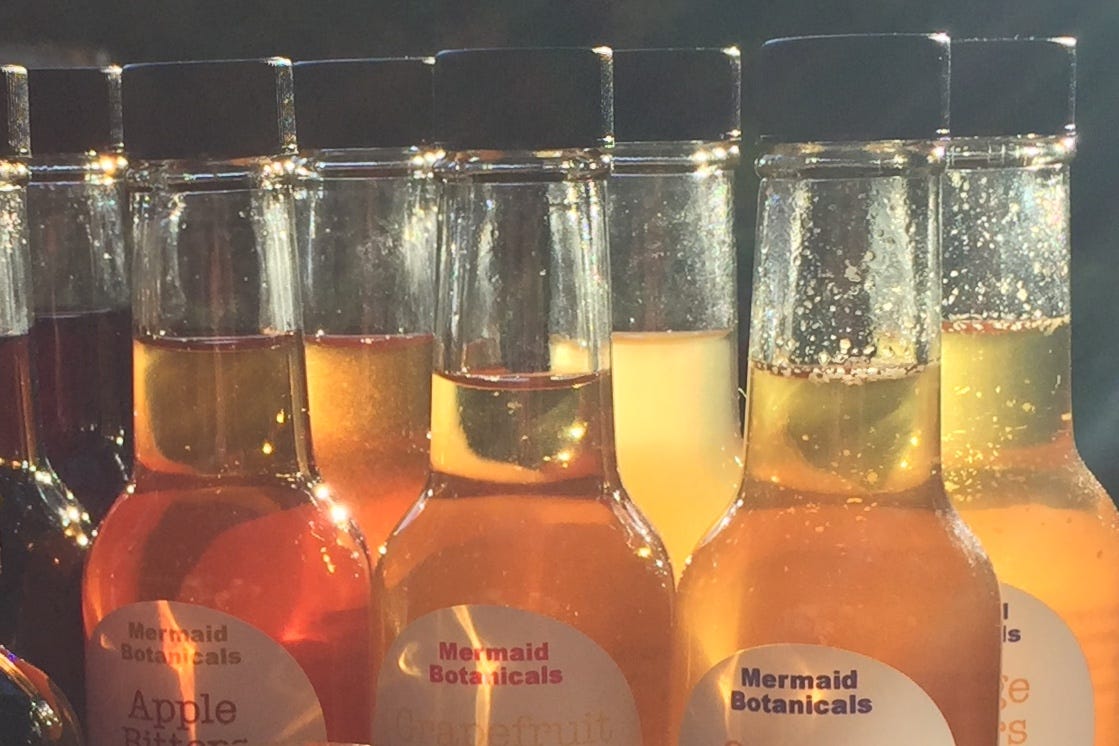
Working with bitter plants as food and medicine has been integral to human culture for our whole existence. These plants remain important supportive health foods, but they are no longer pervasive in our modern American diets. The historical dietary and medicinal importance of bitter herbs is highlighted by fact that bitters formulas—ancient recipes featuring bitter herbs—and special uses of bitter plants developed independently among European, Asian, and South American cultures over 2000 years ago. Some of these secret proprietary formulas have been passed down for generations and are still available today as medicinal formulas or synergists for the perfect cocktail.1
The 1850s was the heyday of bitters in the U.S. with a vast array of hundreds of formulas marketed as cure-alls (before the FDA began to regulate product claims) and listed as a defining element in the original “cocktail,” which originated around this time. There are lots of awesome old bitters advertisements and artfully-designed original bottle labels that you can find images of online; I highly recommend taking a jaunt down “bitters memory lane” with a google search for these items. (In my last search I came across some bitters bottles from the late 1800s for sale on Ebay still containing their original liquid! Needless to say, I was tempted to buy and try them, but thought it wisest not drink a 150-year-old concoction, even if preserved in alcohol.) Many commercial bitters that originated in this boom time did not survive prohibition, and around that same time the rise of the American Medical Association and resulting decline to near extinction of home folk medicine and herbalism practices in the U.S. likely further contributed to the demise of these formulas.2 With the revival of American herbalism for several decades now and the trend toward interesting and innovative cocktail development over the past 20+ years, American bitters have been resurrected—in new specialty formulas in the cocktail and herbal product industry, as well as in the kitchens of foodies and home herbalists. In fact, some companies have even resurrected lost historical formulas and are producing them commercially again.3
I love bitters formulas—many of the common cocktail bitters, such as Campari—are some of my favorite stand-alone sipping beverages, and I often enjoy smaller amounts of bitters in soda water for a flavorful, low-alcohol beverage treat. For me, playing with bitters recipes is largely for the pure pursuit of delighting in herbaceous and interesting flavor combinations. I am also a firm believer in the incredible medicinal value that bitters formulas provide for folks as well—when done right, bitters help to stimulate and coordinate the digestive process, and good digestion is foundational for the health of many systems of the body and the basis for healing numerous conditions.